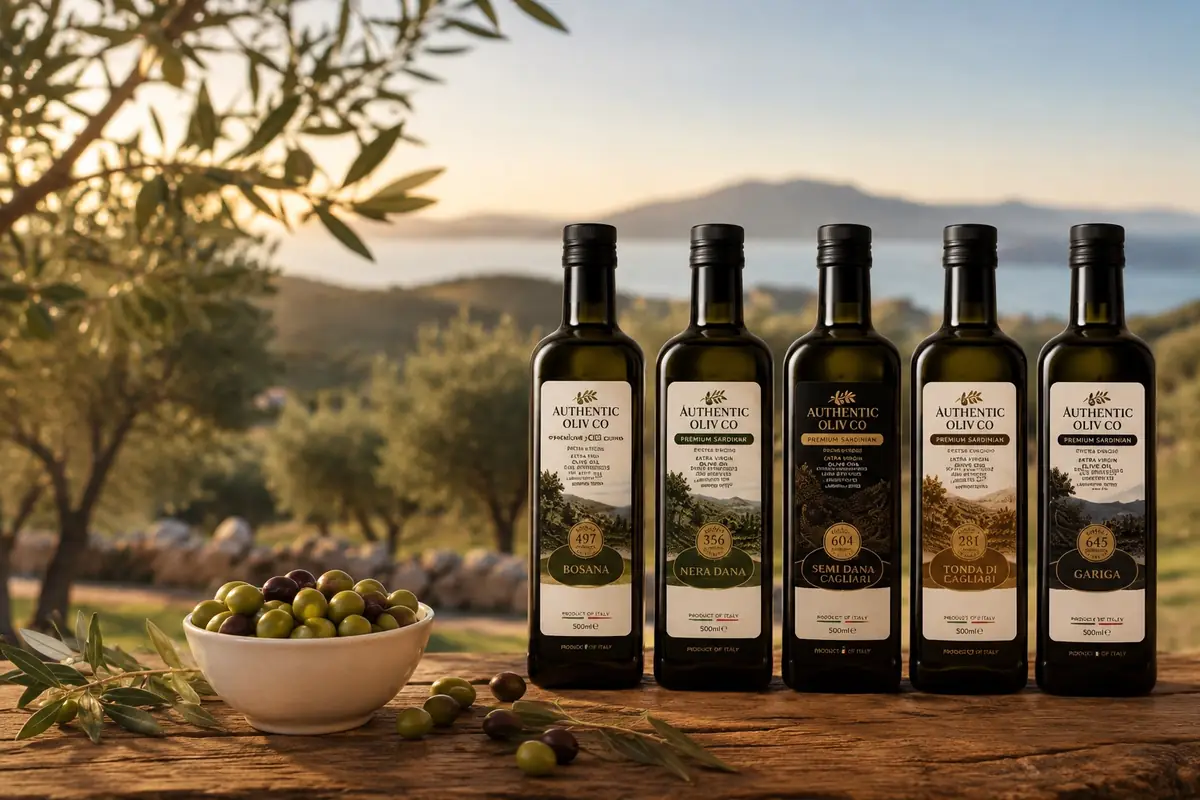
At first glance, four bottles of extra virgin olive oil may look similar.
But Isula, BIO, Ràmine and Birde are not the same olive oil with different labels.
Each one has a different composition, flavour profile and purpose. Some are carefully created blends of Sardinian olive varieties, while others are monocultivar oils made from one specific native variety.
That is why their prices are not the same.
GARIGA ÌSULA — the versatile Sardinian blend
Ìsula was created to bring together different Sardinian olive varieties in one balanced blend.
Gariga describes it as an oil designed to combine some of the best olives of Sardinia into a complete, approachable oil suitable for many tastes.
Its character is relatively delicate, with notes of fresh grass and tomato.
This makes Ìsula the most versatile oil in the collection — an excellent everyday premium EVOO that can be used across many dishes without overpowering the food.
It is particularly suited to vegetables and dishes where you want the oil to complement rather than dominate the ingredients.
Why is it generally less expensive?
Because Ìsula is a carefully composed Sardinian blend rather than an oil produced exclusively from one selected cultivar. It is designed around balance, versatility and excellent quality-to-price ratio.
Independent Italian food publication Gambero Rosso has also highlighted Ìsula for its exceptional relationship between quality and price.
GARIGA BIO / HERITAGE — certified organic production
BIO is different again.
Its value is not based primarily on being a rare monocultivar, but on the way the olives are grown and the standards under which the oil is produced.
Gariga describes BIO as a green, fresh and fragrant oil, produced with respect for the natural balance of the environment.
Its flavour is delicate but aromatic, with notes of almond and tomato.
It is designed to be versatile and to enhance the natural flavour of food rather than cover it.
What makes it different from Ìsula is the certified organic production system behind it.
Organic production involves additional agricultural controls and restrictions and therefore represents a different type of value to the customer.
So when you see:
Gariga BIO / Heritage
you are not simply paying for another version of Ìsula.
You are choosing Gariga's organic extra virgin olive oil.
GARIGA RÀMINE — Monocultivar Nera di Oliena
Now we move into a completely different category.
Ràmine is a monocultivar extra virgin olive oil.
That means it is produced from one specific olive variety rather than from a blend.
In this case:
Nera di Oliena
— one of Sardinia's native olive varieties.
Gariga describes Nera di Oliena as one of the island's aromatic excellences.
Ràmine is intensely fragrant and evokes the freshness of newly cut grass, with herbaceous aromas and notes of tomato leaf.
Despite the intensity of its aroma, its flavour remains relatively delicate.
This makes it particularly suitable for:
- fish carpaccio,
- vegetable soups and veloutés,
- fresh cheeses,
- delicate dishes where the aroma of the oil can remain clearly identifiable.
Why does Ràmine cost more?
Because it is not made by combining several varieties to achieve a general flavour profile.
It expresses one specific Sardinian cultivar — Nera di Oliena.
The purpose of a monocultivar oil is similar to the idea of a single grape variety in wine: you are tasting the character of one variety, one territory and one particular expression of the olive.
GARIGA BIRDE — a Bosana monocultivar from Gariga
Birde is also a monocultivar, but it is completely different from Ràmine.
It is made exclusively from Bosana olives — the most widespread and one of the most characteristic olive varieties of Sardinia.
Bosana is an olive cultivar, not a producer or brand. More than one Sardinian producer can make a Bosana oil. Gariga’s expression of this cultivar is called Birde; Sandalia also produces its own Bosana oil. They are different oils from different producers.
Gariga describes Bosana as a variety that carries the aromas and flavours of the island itself.
Birde has notes of:
artichoke, thistle and fresh almond.
It is fuller-bodied than Ràmine, with a more pronounced bitterness and a decisive flavour.
It works particularly well with:
- roast meats,
- meat-based first courses,
- legume soups,
- mature cheeses,
- stronger Mediterranean dishes.
Birde has also received significant recognition, including Three Leaves in the Gambero Rosso guide to Italy's best olive oils.
Why is Birde positioned at a higher price?
Because, like Ràmine, it is a monocultivar — but here the objective is to express the distinctive character of Sardinia's Bosana olive.
It is a more structured, powerful oil intended for customers who want the olive oil itself to become an important part of the dish.
So which one is “best”?
There is no single best Gariga oil.
They have been created for different people and different foods.
Ìsula
Balanced, delicate and versatile.
A premium Sardinian EVOO for everyday use.
BIO / Heritage
Fresh, fragrant and certified organic.
For customers who specifically value organic production.
Ràmine
Elegant and aromatic. Monocultivar Nera di Oliena.
For delicate dishes and customers who want to experience a native Sardinian variety.
Birde
Full-bodied, bitter, decisive. Gariga’s Birde expression of the Bosana cultivar.
For stronger dishes and customers who want a powerful expression of Sardinian olive culture.
The price is not simply the price of “olive oil”
This is the key point.
When you compare Gariga oils, you are not comparing four identical products in different packaging.
You are comparing:
different olive varieties, different blends, different agricultural choices and completely different sensory profiles.
Just as two wines from the same producer can have very different prices because of grape variety, vineyard and style, premium extra virgin olive oils should not all be expected to cost the same.
The question is therefore not:
“Why is this olive oil more expensive?”
The better question is:
“Which Gariga olive oil is right for the way I cook and the flavours I enjoy?”